
Box Caterpillar
How to get rid of box caterpillars Organically and effectively
As we support organic treatments, our visitors are eligible for a 10% discount on TOPBUXUS products. Find your discount code below.
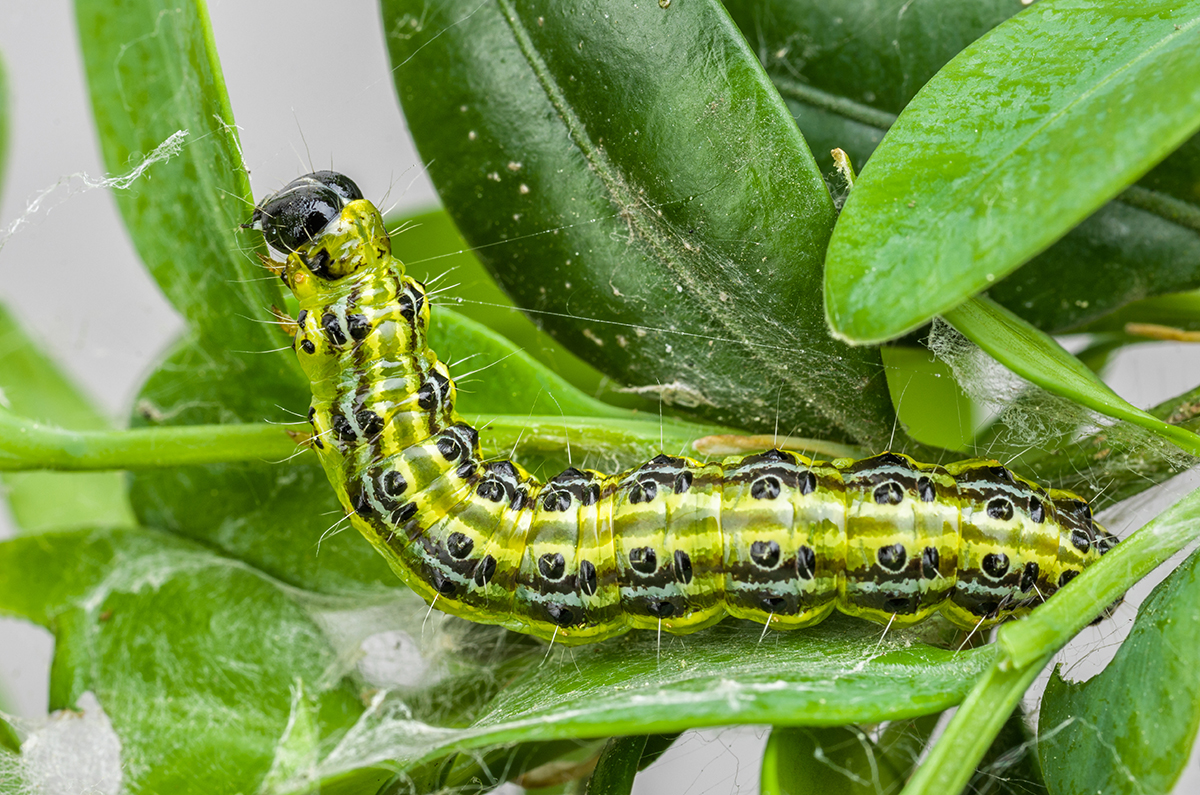
Understanding the Box Caterpillar
Before you begin spraying your Box, it’s important to understand more about the Box caterpillar’s life cycle and habits. In a ‘normal’ (central European) year, the caterpillar will actively feed three times. However, in years with a cold spring and autumn, the caterpillar may be delayed in emerging from its cocoon, resulting in only two active periods.
Remember: the Box Caterpillar hibernates, not the moth!
The most challenging aspect of combating the Box caterpillar is timing. As spring begins and temperatures rise, it’s crucial to monitor your Box for any signs of activity. The first consistently warm week (around 15-20 degrees Celsius) typically triggers the emergence of the caterpillars from their cocoons. It’s important to note that while the caterpillar hibernates, the Box moth does not. Many people start hanging moth traps in their gardens in early spring in hopes of catching a Box tree moth to prevent damage. However, moths won’t be caught until the second part of the Box caterpillar’s cycle.
What is XenTari and is it safe?
First and foremost, we strongly advise against the use of any chemicals on Box trees! Chemical products can harm bees, ladybugs, and other beneficial animals. That’s why we advocate for an organic solution that is 100% effective against the Box caterpillar.
TOPBUXUS is a Dutch producer of organic Boxwood care products, and XenTari is part of their product range. TOPBUXUS XenTari is an insecticide based on Bacillus thuringiensis, a type of bacteria that internally destroys the stomach of the Box tree caterpillar. As a result, the caterpillar stops eating immediately and dies within days. Importantly, dead caterpillars can be consumed by birds without harming them. This product has undergone thorough testing and approval by TOPBUXUS.
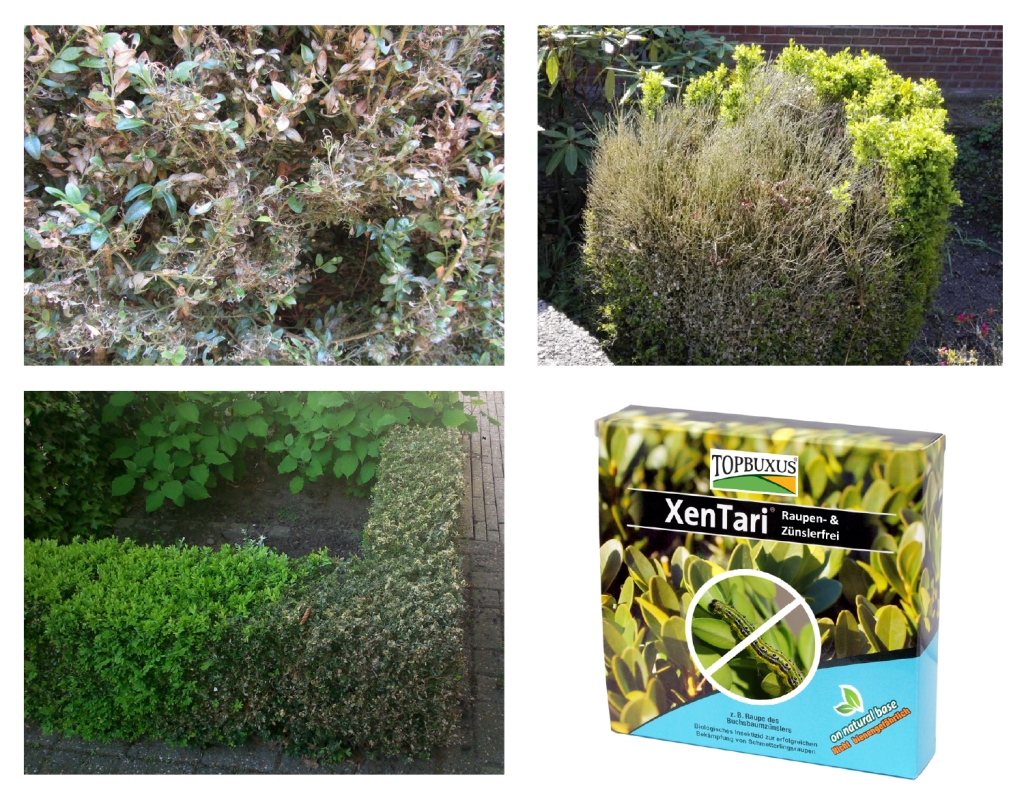
Your discount code is “BUXUSKING” – Valid on all TOPBUXUS products

XENTARI TREATMENT PLAN
- In April or May, we expect the first caterpillars of the year (depending on the start of spring). When you spot active caterpillars, spray immediately with TOPBUXUS XenTari. It should not rain for at least one hour after spraying to allow the product to adhere to the leaves.
- Since not all Box caterpillars may start feeding at the same time, it is advisable to check for active/living caterpillars 2 weeks after the initial treatment. Repeat the treatment with XenTari if necessary.
- By mid to late May, we anticipate Box tree moths. If you catch/spot them, be aware that you may expect caterpillars again approximately 2-3 weeks later. In this case, repeat steps 1 and 2.
- In late summer, a third (and final) cycle may occur, depending on the weather. If you break this cycle by killing all caterpillars, you will not have caterpillars the following spring. Remember: caterpillars hibernate.
- Optional: If there is significant damage from caterpillar feeding, clean the Box plants thoroughly by sweeping out the dead material with a stiff broom. Encourage new leaf growth by feeding the Box plants with TOPBUXUS Grow.

 Box Caterpillar